


Happy Monday, everyone! Ok, so last week’s business surveys came in hot. Activity accelerated, but so did cost pressures, and the bond market noticed. The 10-year Treasury pushed through 5% to its highest level since 2007. Brent remains above $100, and the Fed just raised rates. Growth bought the economy another week of breathing room, though it didn’t make the inflation problem go away.
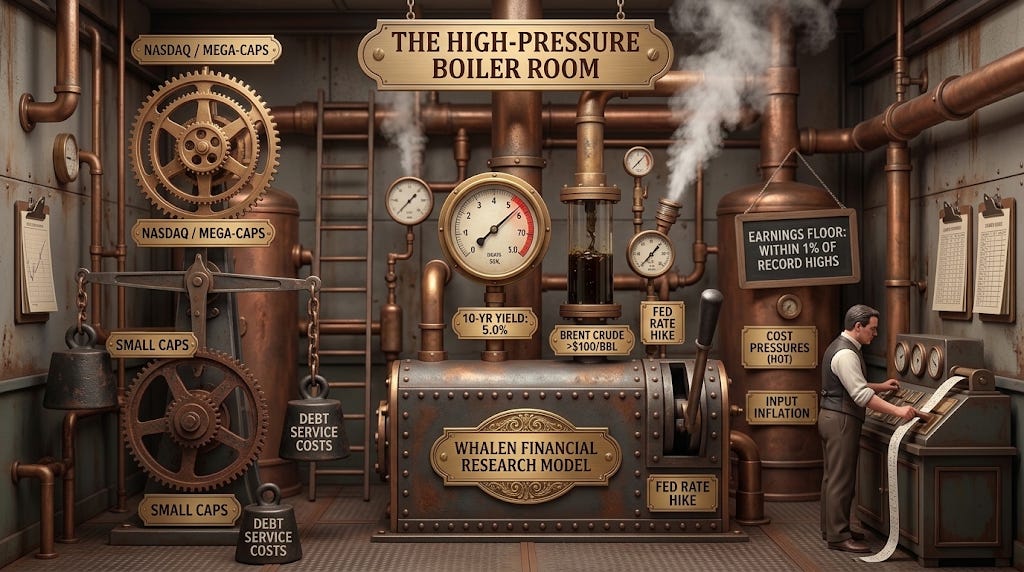
Time to panic? Not quite. Earnings expectations remain strong, and stocks rose last week, finishing within about 1% of their record high. But that calm wasn’t evenly shared. The Nasdaq gained about 2% while small caps fell. We spent Friday looking at why stocks stayed so composed. This week, we get to see whether it has good reason to stay that way.
The Week Ahead
The calendar is unusually well suited to settling an argument we’ve been having for a while. Can the economy keep absorbing expensive oil and higher rates, or are those costs beginning to eat into demand? We’ll get job openings Tuesday, consumer spending and inflation Wednesday, manufacturing Thursday, and the September jobs report Friday. Any one release can surprise us. Together, they should give us a much better read on whether growth is still doing the heavy lifting.
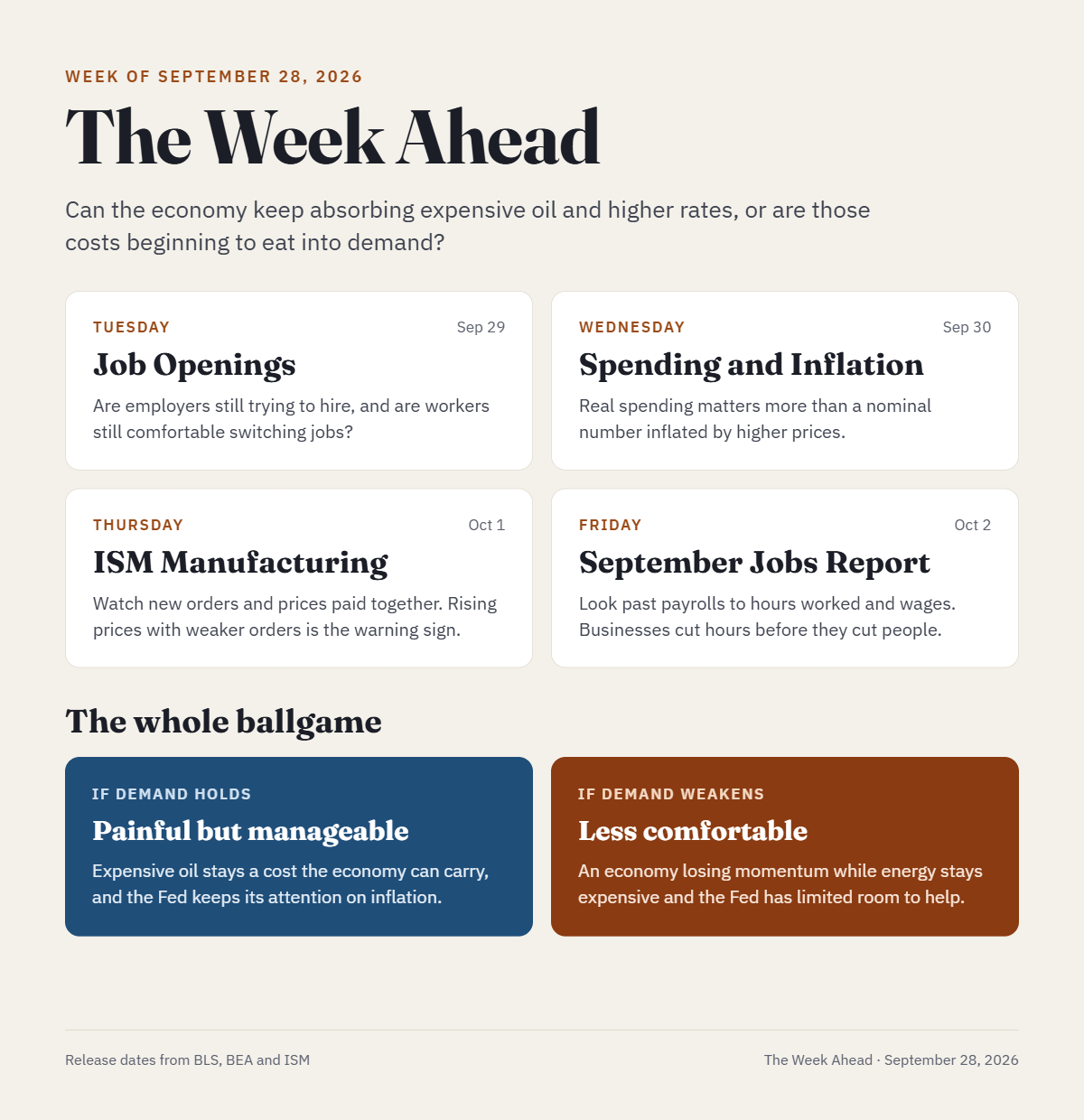
That distinction is the whole ballgame right now. If demand holds up, expensive oil remains painful but manageable, and the Fed can keep its attention on inflation. If demand weakens while energy costs stay high, investors have to consider something less comfortable: an economy losing momentum while the Fed has limited room to help.
Key Events to Watch
Tuesday brings job openings. JOLTS can be a noisy report, so I won’t make a grand declaration from one number. I’ll be looking at whether employers are still trying to hire and whether workers remain comfortable leaving one job for another. That helps set the table for Friday.
Wednesday is the consumer’s turn. The personal income and outlays report gives us spending and the Fed’s preferred inflation measure in one package. Real spending matters more to me than a big nominal number inflated by higher prices. July’s headline PCE inflation was 3.7% over the prior year, so another hot reading could strengthen the case for a further hike, especially if spending remains firm.
Thursday brings ISM manufacturing. Watch new orders and prices paid together. Strong orders would support the view that businesses can work through higher costs. Rising prices with weakening orders would tell a considerably less cheerful story.
Friday is jobs day. Payrolls and unemployment will grab the headlines, but hours worked and wages deserve a look, too. Businesses can cut hours before they cut people. If hiring, hours, and pay all hold together, it becomes harder to argue that oil has already broken the expansion, although a strong report could also nudge the Fed toward another hike.
Earnings This Week
We’re between the big reporting waves, but two reports speak directly to our questions. Carnival reports Tuesday, giving us a look at travel demand and fuel costs. Micron reports Wednesday, putting the AI trade and its earnings expectations back under the lights.
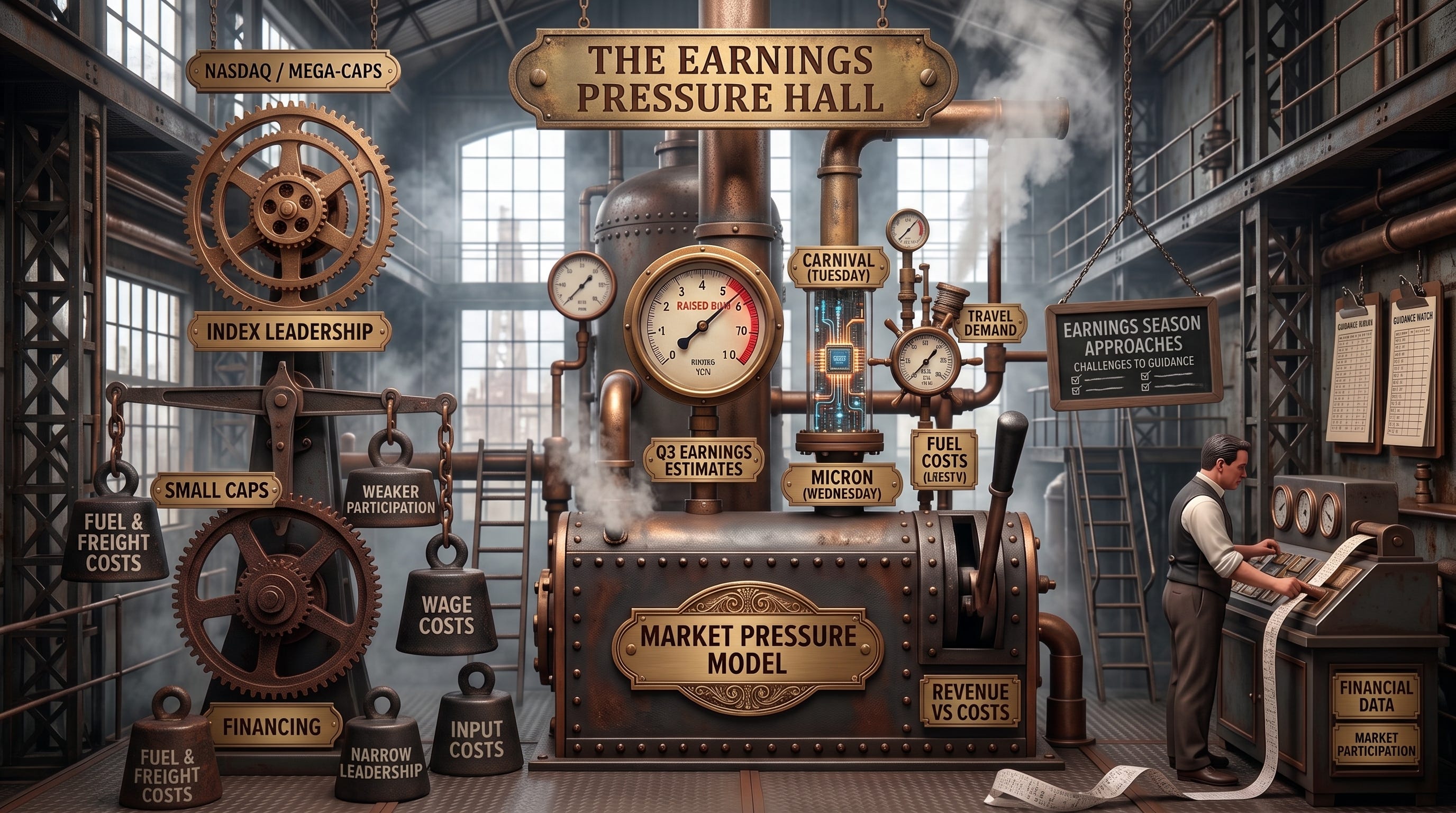
In Friday’s letter, we noted that third-quarter S&P 500 earnings estimates had risen during the quarter. That’s an important source of support for stocks, but it also raises the bar. As earnings season approaches, I’ll be watching for changes to guidance and signs that fuel, freight, financing, or wage costs are beginning to outrun revenue growth.
There’s a market question tucked inside that earnings question. Last week’s index gains masked weaker participation, with the Nasdaq advancing while small caps lost ground. A strong index with narrow leadership is a more fragile kind of calm. I’ll be watching whether this week’s data gives the rest of the market a reason to catch up.
Global Macro and Markets
Oil remains the swing factor. I still view this shock as temporary, but “temporary” doesn’t tell us how expensive the trip will be. Diplomatic headlines and changing Gulf supply routes can move Brent quickly. Diesel and transport costs may take longer to settle. Hopes for progress helped ease oil Friday; the rejection of Iran’s proposal sent it sharply higher early Monday, before expectations of further talks pulled prices back from their highs. That’s a lot of movement for a market waiting on a resolution.
Watch what the bond market thinks oil means. If Brent rises and Treasury yields climb alongside it, inflation remains the dominant worry. If oil stays high while yields fall, credit spreads widen, and cyclicals struggle, the market may be shifting its attention toward growth damage. That change in reaction would matter more to me than whether Brent crosses a tidy round number on any given morning.
The Fed is part of the pressure, not the whole story. September’s hike made clear that Warsh’s Fed is taking inflation seriously, and most officials projected at least one more hike this year. Strong growth gives them room to do that. Slowing growth with sticky energy prices makes the job much harder, which is why this week’s combination of spending, prices, and employment matters more than any one Fed speech.
Keep an eye on the dollar and market leadership. A softer oil market, steadier yields, and a dollar that stops pressing higher would improve the setup for small caps, biotech, travel, and other rate-sensitive parts of the market. That’s the broader participation I’d expect if the energy shock begins to normalize. I want to see those markets confirm the story before declaring the all-clear.
So Where Does That Leave Us?
My view hasn’t changed much. Growth has been stronger than the oil-and-rates headlines would suggest, and last week’s PMIs gave that case a fresh piece of evidence. I still expect the energy shock to ease rather than define the next several years. But the market is asking growth to do a lot of work in the meantime, while a relatively small group of stocks continues to carry much of the load.
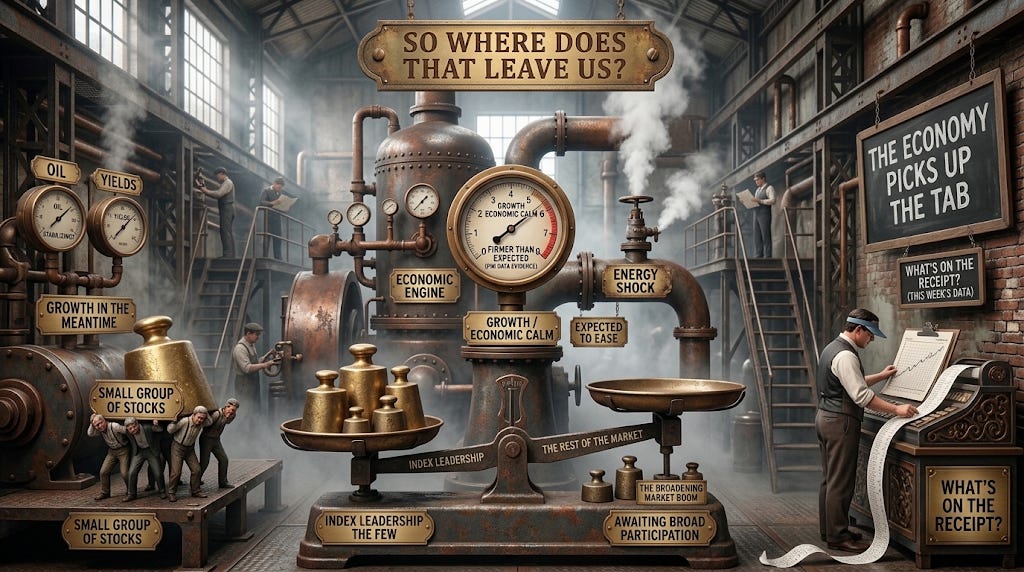
If spending and hiring remain firm while oil and yields stabilize, the market has room to broaden out. If growth softens and energy stays sticky, the calm we discussed Friday deserves another interrogation. For now, the economy is still picking up the tab.
Have a great week, everyone!
Luke Perry
Portfolio Manager, Whalen Financial