


Happy Friday everyone! What a week it’s been. Oil pushed back above $100, the 10-year hit its highest level since 2007, and the bond market finally woke up, yet stocks barely flinched. This week I sat the market down for a proper interrogation to find out why, and let’s just say its story is a good one. Whether it holds up is another matter.
So, without further ado, let’s get on with the show.

Agent Kujan had a crowded lineup in front of him. Brent crude was above $100 a barrel, the 10-year Treasury yield had pushed past 5%, the conflict with Iran was still unsettling energy markets, and the midterms were getting closer. Any one of those could have rattled stocks, and together they ought to have had everyone in the room talking over one another.
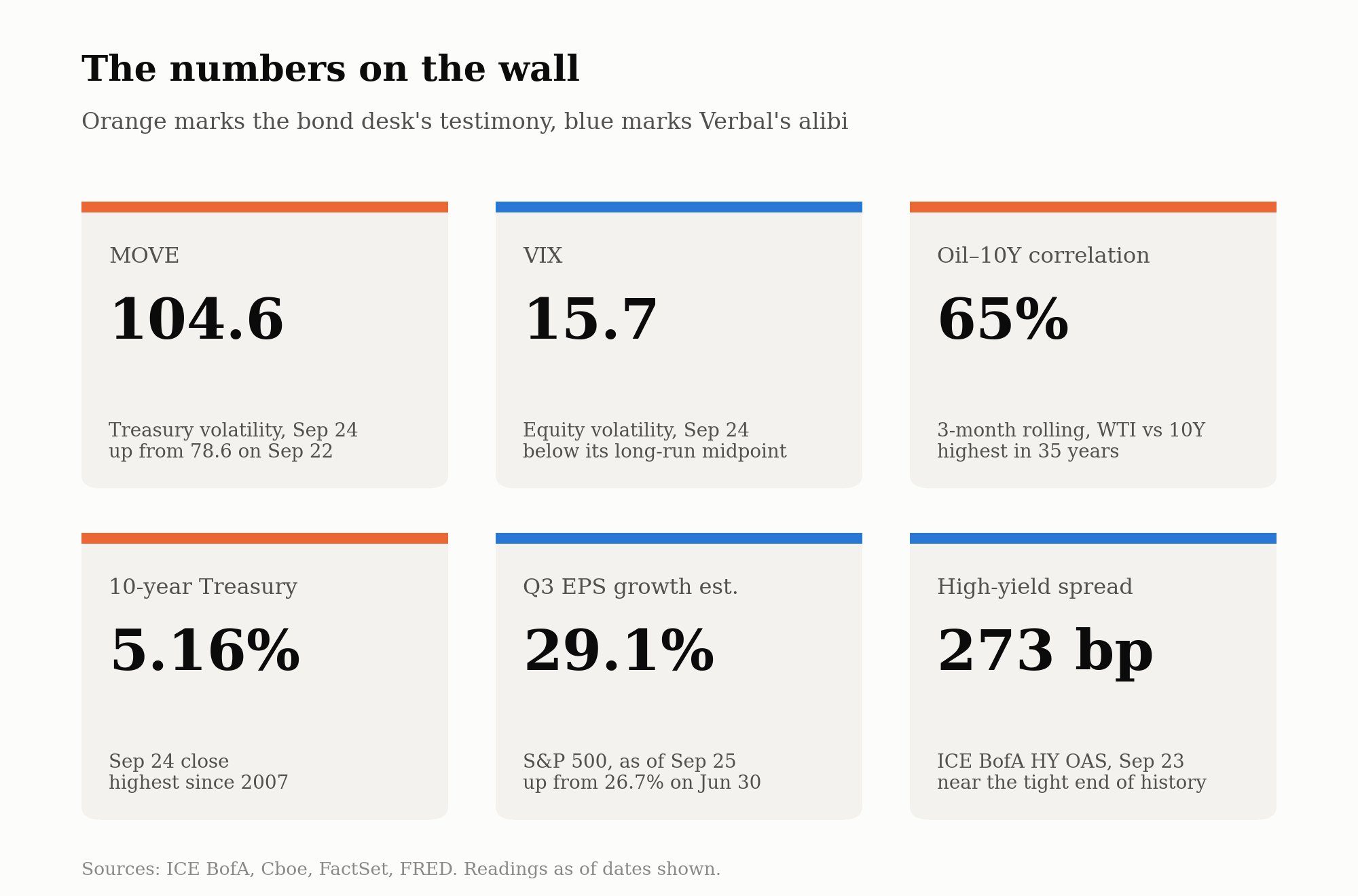
Across the table, Verbal looked comfortable. The S&P 500 had taken some knocks, but nothing resembling the alarm suggested by the headlines, and VIX had closed Thursday at 15.67. He had an explanation, of course, because Verbal always did.
“Start with earnings,” he told Kujan.
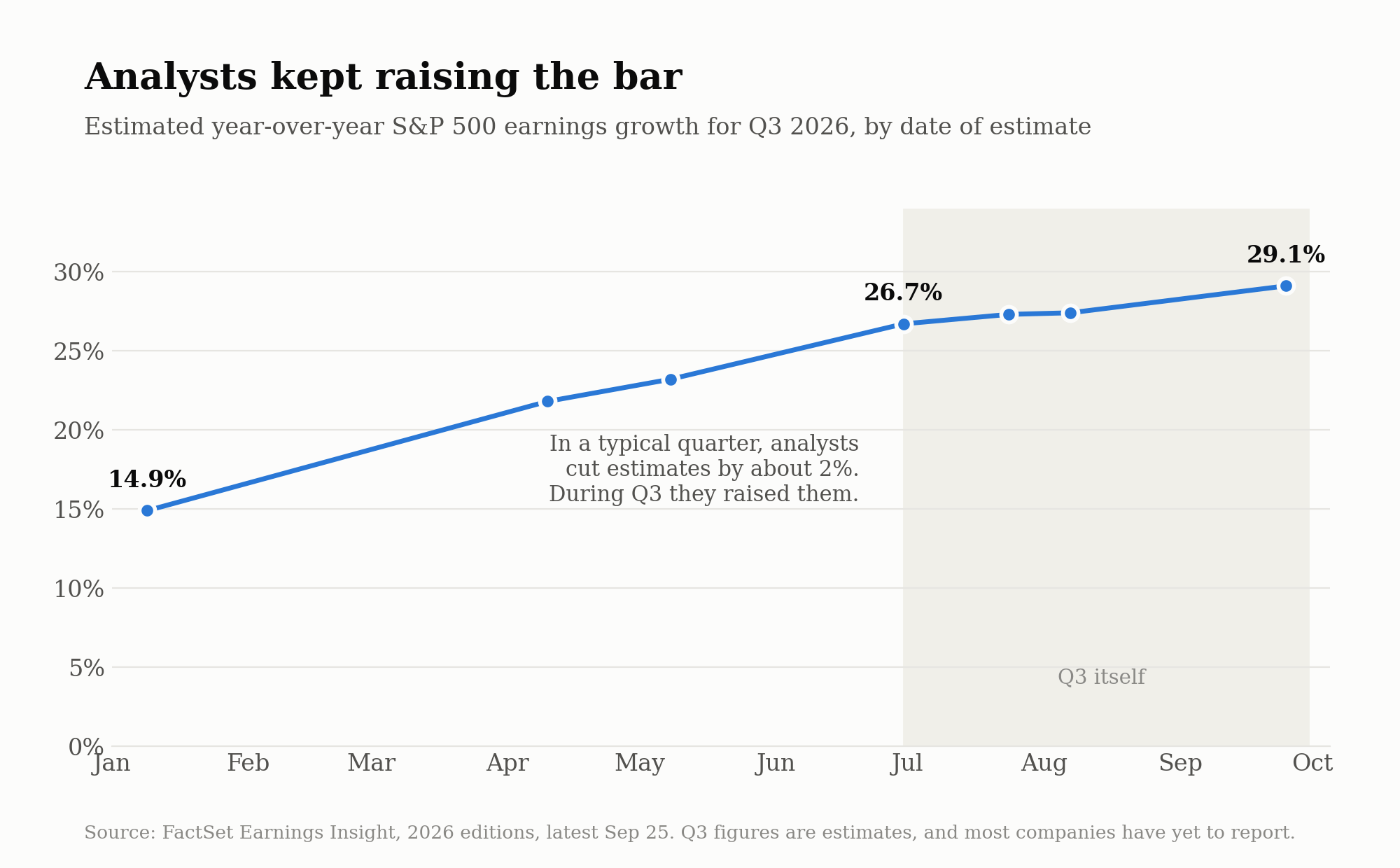
That was a fair place to start. As of September 25, FactSet expected third-quarter S&P 500 earnings to grow 29.1% from a year earlier, up from its 26.7% estimate at the end of June. Analysts had raised their estimates during the quarter, when they would ordinarily be trimming them, and expected earnings had risen faster than stock prices. That brought the index’s forward price-to-earnings ratio down from 20.4 at the end of June to 19.2. Kujan wrote forecast beside the figures, since most companies still had to report, but he couldn’t dismiss what the revisions were telling him.
“And that oil price you’re worried about?” Verbal asked. “Take a look at energy earnings.”
He had a point there, too. Expensive fuel takes money from households and raises costs for airlines, shippers, and manufacturers, while lifting expected profits for parts of the energy sector. Those upward energy revisions can make the index’s earnings outlook look stronger even as the family filling up the SUV wonders what, exactly, is going so well. Kujan kept both accounts in the file.

Bessent came in next carrying a Treasury buyback schedule. Beginning September 9, the department had raised the maximum size of its purchases of older, longer-dated bonds from $2 billion to at least $4 billion per operation, giving dealers a more dependable place to sell securities that can be awkward to move when the market gets rough. Kujan pulled an older folder from the cabinet and found Yellen’s name on it.
Her Treasury had launched regular liquidity-support buybacks in 2024, and Bessent had expanded a program that already existed. An IMF working paper later found that those buybacks had moderately improved trading conditions in older Treasuries and reduced pressure on dealers’ inventories. Useful machinery, Kujan thought, though machinery for keeping bonds trading was unlikely to settle what yield investors should demand from them.
He checked the plumbing while he was at it. On September 22, the New York Fed said overnight funding and Treasury repo rates remained close to the rate it pays on bank reserves, consistent with reserves remaining ample. The Chicago Fed’s adjusted financial conditions index stood at −0.573 for the week ending September 18, and high-yield credit spreads were about 273 basis points on September 23. The readings came from different dates, but together they suggested that higher Treasury yields had yet to produce a broad scramble for cash or a retreat from corporate credit.

Kujan was beginning to understand why stocks were still standing when a report arrived from the bond desk.
MOVE, which tracks expected volatility in Treasuries, had climbed from 78.56 on Tuesday to 104.58 on Thursday. Cboe had also measured the three-month correlation between oil prices and the 10-year yield at 65%, its highest in 35 years and just below the level reached at the start of the first Gulf War. The bond market appeared to be connecting the oil shock to inflation and rates, and investors were paying more to protect against where that connection might lead.
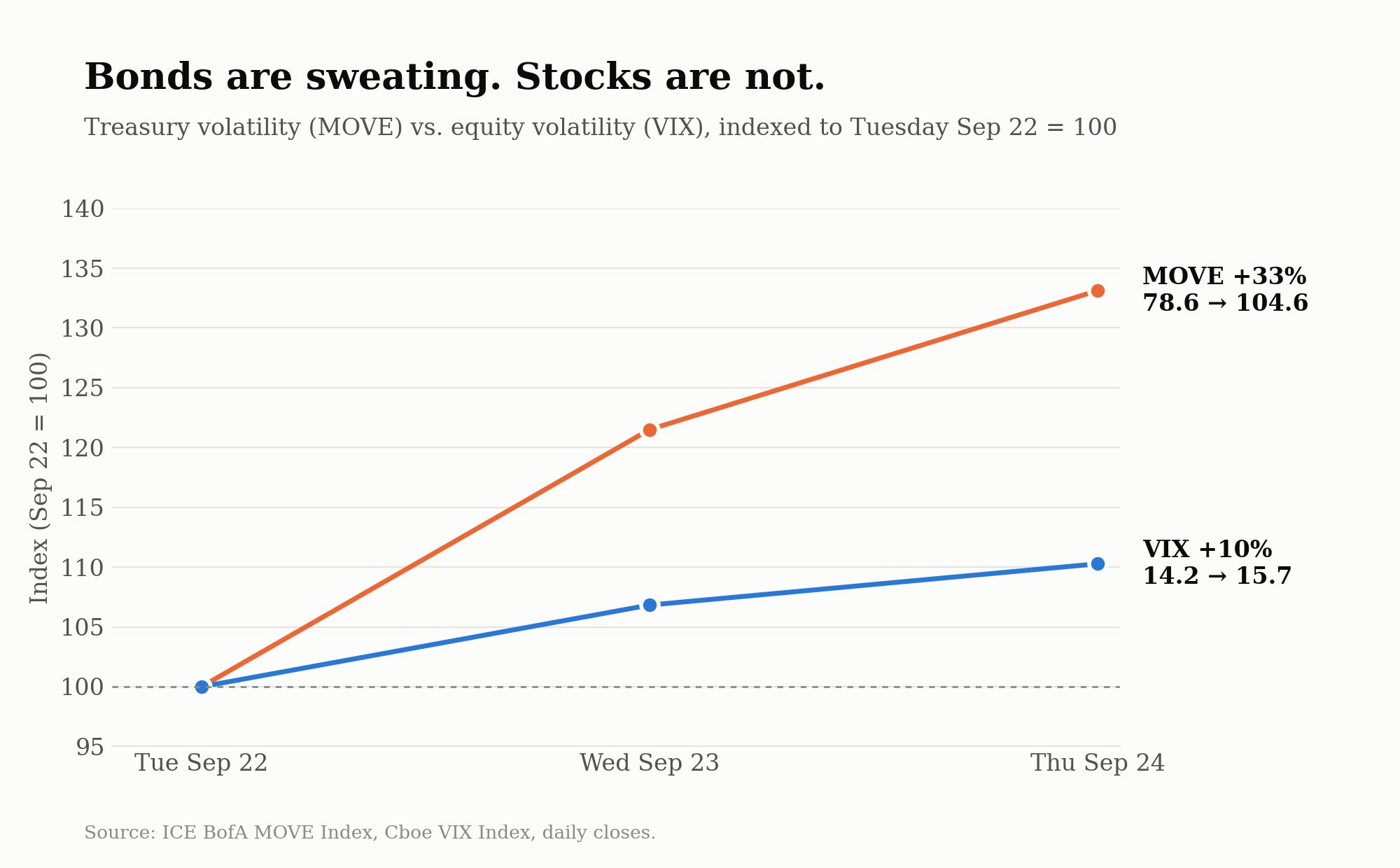
Kujan looked back at Verbal, who had never actually told him the bond market was calm. He had inferred it from the way stocks were behaving.
The equity options market offered another clue. Earlier this month, investors had paid up for downside protection. Last week, Cboe observed them selling some hedges, buying calls, and flattening option skew across the major indices. Over that same week, VIX fell about a point while Cboe’s measure of average single-stock volatility rose to 36%. Individual stocks were expected to swing more, even as the index looked composed. A low VIX described the price of protection on the index, and it didn’t establish that every stock inside it was safe.

Trump’s photograph was on the board as well. With the midterms approaching, he had every political reason to want growth, orderly markets, and cheaper gasoline, and he had argued that fuel prices would fall when the Iran conflict ended. Kujan could see the incentive without mistaking it for control. An election gives a president a deadline, but oil producers, bond buyers, and voters at the pump aren’t obliged to meet it.
Then Kujan came back to the Fed’s September 16 decision, its first rate hike since 2023. It had raised its target range by a quarter point to 3.75%–4%, describing an economy expanding at a solid pace while inflation remained elevated. Sixteen of the eighteen officials who submitted rate projections expected at least one more hike before the year was out. That was an uncomfortable combination for anyone counting on either a quick slowdown in demand or an easy retreat in borrowing costs. It also looked familiar to us, since growth holding up alongside sticky inflation is the regime we’ve been watching for, even if the path through it has proved rougher than expected.

Verbal’s story was persuasive because the details were real. Earnings estimates were rising, Treasury buybacks were helping the bond market function, funding was working, and credit had held together. What he had left Kujan to supply was the assumption that each problem would remain in its own room. Oil could lift energy profits while squeezing consumers, Treasury volatility could rise without dragging corporate credit with it, and individual stocks could move in different directions while the index appeared serene. So far, the market had managed all three.
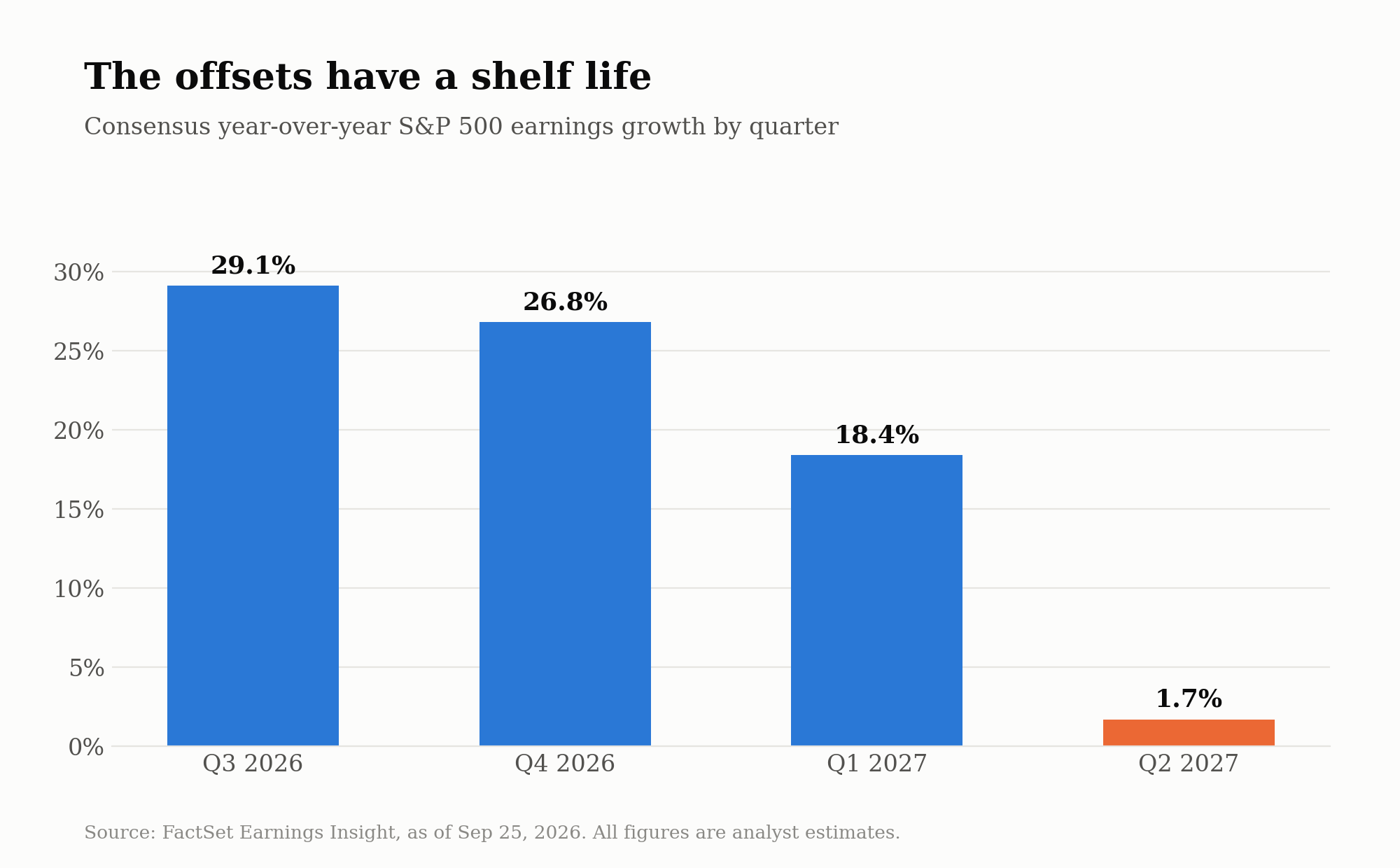
That separation is thinner than it looks. FactSet’s consensus has earnings growth slowing sharply by the second quarter of 2027, leaving less room for one sector’s gains to mask weakness elsewhere. If expensive oil and higher borrowing costs start hitting profits across more of the index, Kujan won’t need another suspect. He’ll need to find out why the witnesses have begun telling the same story.
That’s what I’ll be watching. If credit spreads widen or funding tightens, the trouble in Treasuries has found a way into the rest of the building. And if companies stop raising earnings estimates as they report, one of the market’s best explanations for its resilience starts losing witnesses.

For now, the usual suspects account for a great deal. Kujan closed the folder and looked once more at the numbers on the wall, with MOVE above 100 and VIX in the mid-teens. Verbal was still sitting there, telling a good story. Kujan just wasn’t ready to let him leave.
Luke Perry
Portfolio Manager, Whalen Financial